


DIGITAL LEADERSHIP: CAMEROON TO HOST ARTAC HEADQUARTERS
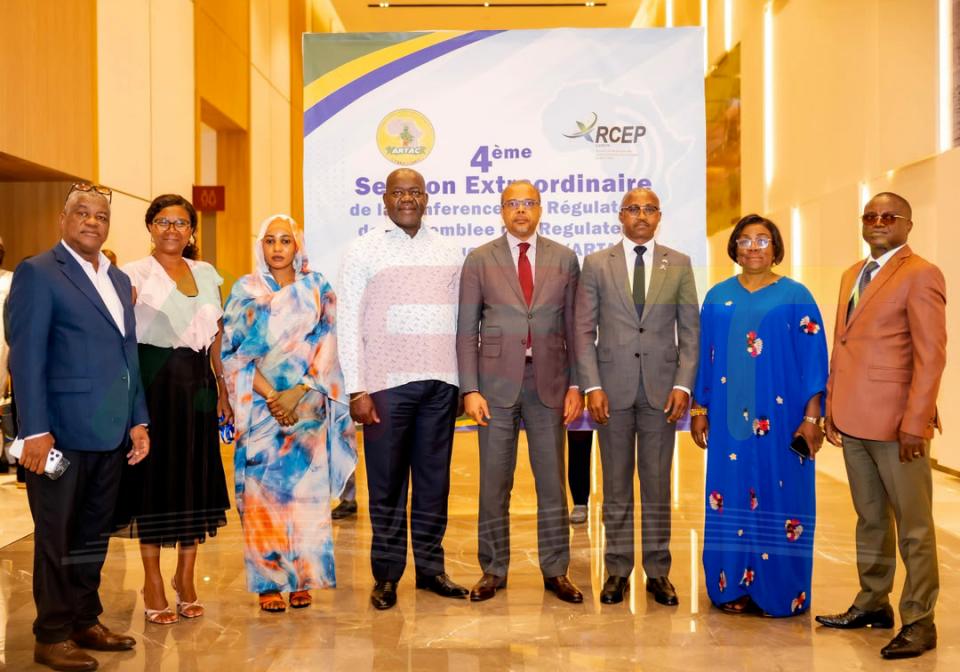
Meeting in Libreville on 20 and 21 October 2026, telecommunications regulators from Central Africa took a decisive step toward building a more integrated sub-regional digital space. At the conclusion of the 4th Extraordinary Session of the Conference of Regulators of the Assembly of Telecommunications Regulators of Central Africa (ARTAC), Cameroon emerged as one of the key drivers of this regional momentum, marked by a major decision: the establishment of the organization’s headquarters on its territory.
In Libreville, representatives of the telecommunications regulatory authorities of Cameroon, the Central African Republic, Congo, the Democratic Republic of the Congo, Gabon, Chad, and the regulator of São Tomé and Príncipe met to discuss ARTAC’s institutional and operational future.
This strategic gathering resulted in the adoption of the organization’s revised foundational instruments, including its Statutes, Rules of Procedure and Financial Regulations, ushering in a new phase of maturity for this sub-regional digital cooperation body.
Led by the Director General of the Telecommunications Regulatory Board (TRB), Professor Philémon Zoo Zame, the Cameroonian delegation played an active role in the proceedings, which also marked the official launch of thematic working groups expected to shape the organization’s future actions.
Among the key resolutions adopted in Libreville, one carries particular significance for Cameroon. Regulators decided to establish ARTAC’s headquarters in Cameroon, in accordance with the relevant statutory provisions and terms of reference. At the same time, the responsibility for appointing the organization’s Executive Secretary was entrusted to Cameroon’s TRB, in line with the rotation mechanism provided for in the institution’s governing texts.
This decision reinforces a leadership role that Cameroon has exercised since the organization’s inception. Since ARTAC was created, the functions of Permanent Secretary have consistently been held by Cameroonian officials, reflecting the TRB’s longstanding commitment to digital cooperation and regional integration in its capacity as a “guarantor regulator.”
Beyond its symbolic significance, the decision to locate the organization’s headquarters in Cameroon reflects the confidence of sub-regional regulators in the country’s ability to advance shared ambitions in digital governance, regulatory harmonization and telecommunications development.
Created following a decision of the Central African Conference of Posts and Telecommunications (COPTAC) to strengthen cooperation among national regulatory authorities, the Assembly of Telecommunications Regulators of Central Africa was established in response to the need for coordinated solutions to the common challenges facing countries across the sub-region.
At a time when telecommunications networks extend far beyond national borders, the coordination of public policies and regulatory frameworks has become essential to ensuring the harmonious development of the sector. ARTAC therefore provides a privileged platform for experience-sharing, consultation and the development of common positions on major issues relating to electronic communications and the digital economy.
This integrative mission has now been strengthened by the institutional reform adopted in Libreville, equipping the organization with more modern tools and a consolidated governance framework.
ARTAC’s ambitions revolve around several major initiatives aimed at accelerating Central Africa’s digital integration.
Among them is the development of regional free roaming, regarded as one of the flagship projects of cooperation among regulators. The objective is to enable citizens to communicate across borders at lower costs while promoting mobility and economic exchanges. This issue remains a priority for Cameroon, as illustrated by the meeting held in Libreville between the Director General of the TRB and Cameroon’s Ambassador to Gabon, H.E. Edith Félicie Noëlle Ngaeto Zam, which focused on progress in the roaming implementation process between the two countries.
ARTAC also intends to strengthen its influence within major international regulatory bodies in order to promote a coherent sub-regional voice on global digital challenges.
Another priority area is the coordination of radiofrequency spectrum management along border areas. Improved frequency harmonization is essential to preventing cross-border interference, ensuring network quality of service and optimizing the use of this strategic resource.
The regulators also adopted a resolution on the organization and operation of the Central African ICT Observatory, which is expected to become a key reference tool for the collection, analysis and sharing of sectoral data across the sub-region.
The Libreville conference was further marked by ARTAC’s growing openness. Regulators approved the accession of the regulator of São Tomé and Príncipe, thereby expanding the organization’s geographical scope and strengthening its regional representativeness.
This enlargement confirms ARTAC’s increasing attractiveness and the relevance of its cooperative model at a time when digital transformation is accelerating across the continent.
The 4th Extraordinary Session in Libreville will be remembered as a turning point in ARTAC’s history. Through institutional reform, the launch of new cooperation mechanisms and the decision to establish the organization’s headquarters in Cameroon, the resolutions adopted reflect a collective determination to deepen digital integration in Central Africa.
For Cameroon and its national regulator, these developments represent recognition of years of work dedicated to regional cooperation. They also reinforce the country’s position as a central player in digital governance in Central Africa, at a time when challenges related to connectivity, innovation and digital sovereignty increasingly require coordinated responses at the regional level.
Eric-Serge Maye Angouan'd