

Cameroon Joins the Founding States of WAICO: A Strategic Step Toward Global AI Governance
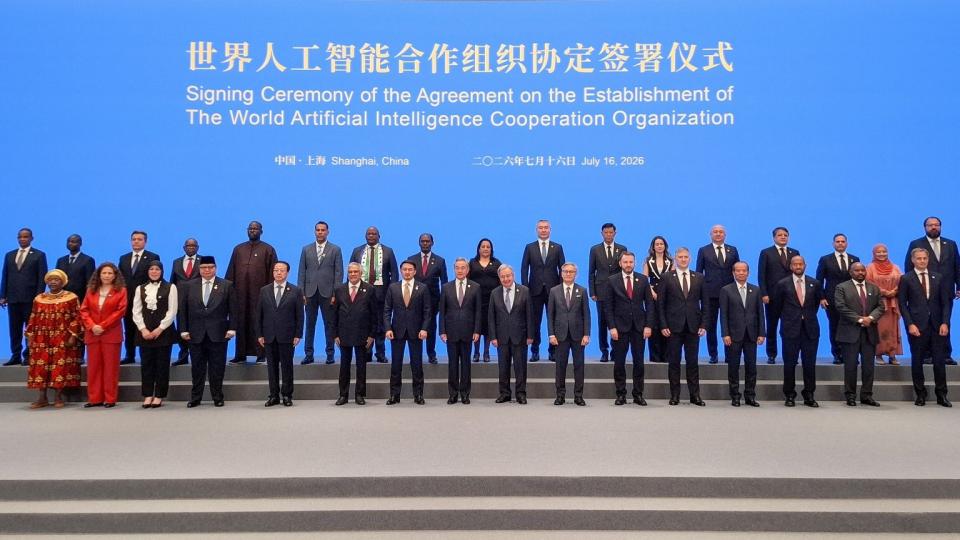
Cameroon has officially taken its place among the pioneering nations shaping the future of global artificial intelligence governance. On 16 July 2026 in Shanghai, the Minister of Posts and Telecommunications, Minette Libom Li Likeng, signed on behalf of the Government of Cameroon the constitutive act of the World Artificial Intelligence Cooperation (WAICO), a newly established intergovernmental organization dedicated to coordinating international public policies on AI.
The signing ceremony was held on the sidelines of the World Intelligence Conference, a major global forum focused on emerging technologies, investment trends and regulatory challenges related to artificial intelligence. The 2026 edition, running from 17 to 20 July, brings together high-level delegations to discuss the rapid expansion of AI and the need for a coherent, inclusive and globally coordinated governance framework.
By joining WAICO, Cameroon becomes one of 29 founding member states, alongside major technological powers such as China, Russia and Brazil, as well as several countries from Asia, Eastern Europe and Latin America. Ten African nations, including Cameroon, have confirmed their commitment to this initiative, which aims to structure international cooperation and promote a human centric approach to AI governance.
WAICO’s creation stems from a proposal made in July 2025 by Chinese Premier Li Qiang during the World Artificial Intelligence Conference. The initiative was accompanied by a comprehensive action plan covering thirteen priority areas, including the development of digital infrastructure, the establishment of data centers, scientific cooperation and the promotion of innovative technologies.
Headquartered in Shanghai, WAICO is tasked with fostering international dialogue, harmonizing public policies and ensuring equitable sharing of the benefits derived from artificial intelligence. The organization positions itself as a platform for consultation, collective contribution and strengthened cooperation, with particular attention to the needs and aspirations of countries in the Global South.
For Cameroon, this accession represents a significant milestone in the implementation of its national strategy for artificial intelligence development. The country is currently working to establish a robust legal and institutional framework, design specialized training modules and develop dedicated AI infrastructure. By joining WAICO, Cameroon reinforces its ambition to make artificial intelligence a driver of economic and social transformation, while aligning with international standards in technological governance.
This progress is fully in line with the vision supported by public authorities and championed by the Telecommunications Regulatory Board (TRB), which remains committed to promoting, regulating and enhancing digital technologies for national development.
ESMA